From Identifying Local Needs to Building Sustainable Enterprises.
RIIELG operates across entrepreneurship, skills, technology, enterprise incubation, cluster development, markets, and sustainable livelihood generation. Each activity functions as an interconnected component within a single grassroots empowerment ecosystem.
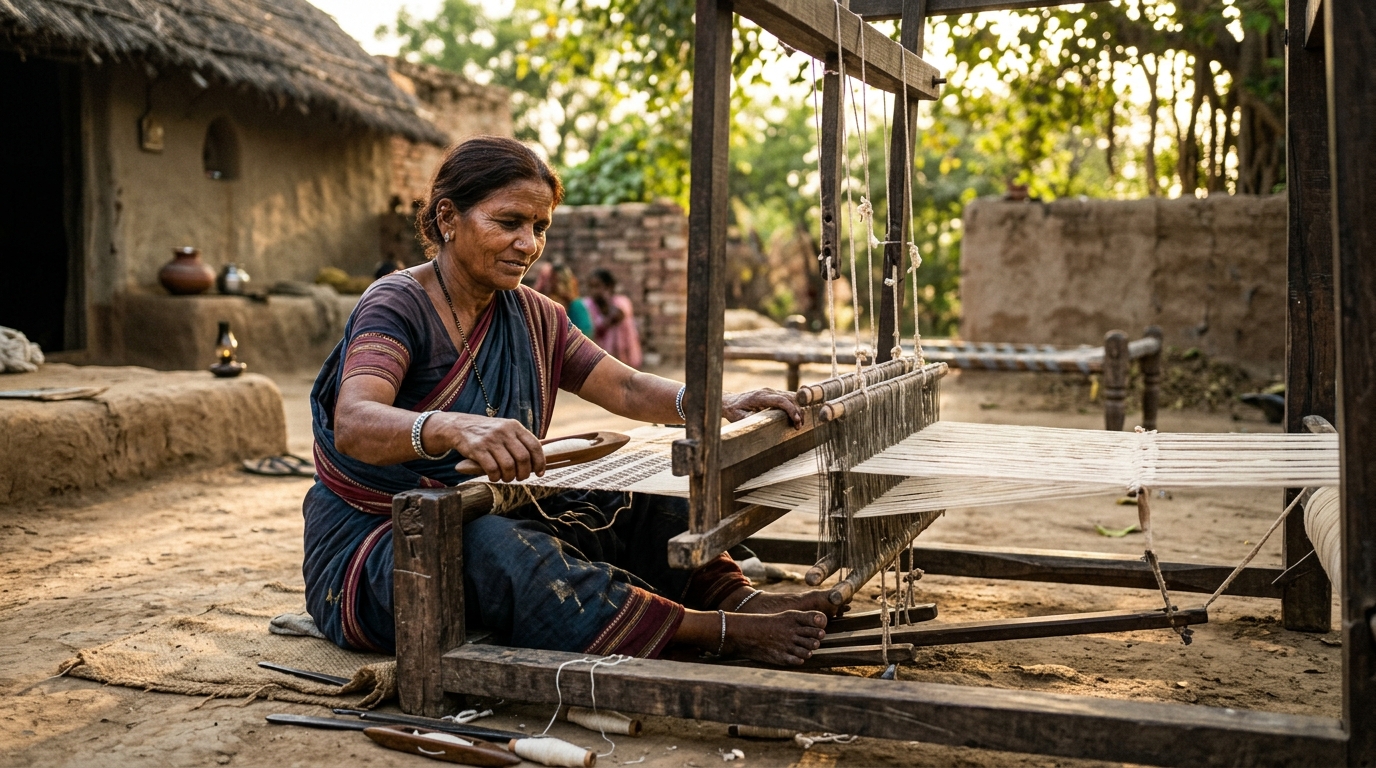
Translating institutional policy schemes into tangible community production assets and sustainable household incomes.
RIIELG Methodology
From Identification to Sustainable Impact
RIIELG follows a structured approach that moves from identifying local needs and opportunities through training, incubation, handholding, finance, technology and market access towards enterprise growth and sustainability.
IDENTIFY — Understanding needs, opportunities and challenges.
Baseline socio-economic diagnostic surveys, local resource mapping, raw material availability assessments, and grassroots skill gap identification.
IDENTIFY
Understanding needs, opportunities and challenges.
Baseline socio-economic diagnostic surveys, local resource mapping, raw material availability assessments, and grassroots skill gap identification.
INSPIRE
Encouraging entrepreneurship, innovation and enterprise creation.
Entrepreneurship Awareness Camps (EAC & EAP), youth motivational cohorts, student innovation drives, and community-led enterprise ideation.
TRAIN
Building practical, market-oriented skills.
Hands-on vocational mastery across traditional crafts, handloom, engineering trades, agro-processing, and modern technical disciplines.
INCUBATE
Supporting ideas and enterprises through incubation.
Business model formulation, pilot production batches, prototype creation, quality testing, and statutory compliance assistance (Udyam, GST).
HANDHOLD
Providing mentoring, business support and continued guidance.
On-ground operational mentoring through MEPP & MoRE desks, bookkeeping support, production management, and crisis problem-solving.
FINANCE
Connecting enterprises with financial opportunities and institutions.
Detailed Project Report (DPR) preparation, bank credit syndication, PMEGP/Mudra loan facilitation, and microfinance linkage.
TECHNOLOGY
Supporting technology adoption and digital enterprise capabilities.
Common Facility Center (CFC) machinery commissioning, modern tooling, lean manufacturing methods, digital recordkeeping, and quality standards.
MARKET
Connecting products and enterprises with markets and value chains.
Buyer-seller meets, state & national craft expos, institutional procurement linkage, packaging design, and e-commerce onboarding.
SCALE
Supporting enterprise development, growth and expansion.
Producer-organisation federation, Special Purpose Vehicle (SPV) formalization, multi-cluster scaling, and product line diversification.
SUSTAIN
Promoting environmentally responsible, resource-efficient and economically viable development.
Zero-waste green practices, community equity ownership, intergenerational master-artisan knowledge transfer, and long-term financial viability.
Our 11 Key Activities
Every activity represents an officially mandated vertical with verified programmatic outputs, direct field delivery, and specialized methodologies.
Entrepreneurship Development
Fostering entrepreneurial mindset, startup acumen, and enterprise creation across rural and semi-urban communities.
RIIELG designs and executes comprehensive entrepreneurship development interventions ranging from introductory awareness camps to intensive multi-week cohort trainings, student innovation support, and business counselling.
- Awareness programmes (EAC / EAP)
- Entrepreneurship Development Programmes (EDP)
- Technology Entrepreneurship Development Programmes (TEDP)
- Student innovation & college incubation drives
Skill & Livelihood Training
Market-oriented skill programmes across traditional, rural, technical, and allied sectors.
Structured, competency-based vocational training delivered by master artisans and certified technical instructors, geared toward wage employment, self-employment, and collective production.
- Market-aligned curriculum and skill delivery
- Hands-on master artisan apprentice models
- Assessment, certification, and tool-kit linkage
- Post-training placement and enterprise onboarding
Training Need Identification, Curriculum Design & Implementation
End-to-end planning, pedagogical engineering, and robust field execution of vocational interventions.
A methodical three-phase training architecture ensuring that every training programme responds to verified industry demand, local raw material advantages, and learner capabilities rather than generic syllabi.
- Grassroots training need assessment (TNA) and skill-gap surveys
- Industry-aligned modular curriculum design with vernacular instructional materials
- Training of Trainers (ToT) and master artisan empanelment
- Standardised pedagogical delivery, attendance monitoring, and outcome tracking
Rural Artisan & Village Industry Support
Holistic handholding for traditional craftspersons, cottage units, and village industry practitioners.
Direct field interventions to preserve endangered heritage crafts, upgrade artisanal technologies, organise informal workers into viable self-help groups or producer collectives, and conduct rigorous impact evaluations.
- Artisan socio-economic baseline & needs assessment
- Appropriate technology and ergonomic tool selection
- Product development, prototyping, and design diversification
- R&D in raw materials, natural dyes, and processing efficiency
Cluster Development
End-to-end technical agency (TA) and implementing agency (IA) support under SFURTI and MSME schemes.
Transforming fragmented artisan clusters into competitive, self-sustaining industrial ecosystems equipped with Common Facility Centres (CFCs), modern machinery, collective governance, and market branding.
- Cluster mapping and geographical potential assessments
- Diagnostic Study Reports (DSR) & baseline surveys
- Detailed Project Report (DPR) formulation and scheme approvals
- Common Facility Centre (CFC) civil and machinery planning
Enterprise Incubation & Handholding
Dedicated handholding from raw concept ideation to viable, scaled commercial operations.
Structured incubation programmes delivering business planning, prototype refinement, regulatory registrations, technology onboarding, and continuous on-site mentorship through institutional desks.
- Ideation and business concept validation
- Business model development and unit economics structuring
- Prototype creation, sample testing, and refinement
- Technology adoption and equipment procurement guidance
Technology & Digital Entrepreneurship
Promoting digital literacy, modern production tools, and technology-enabled livelihood solutions.
Demystifying and introducing practical technological capabilities—ranging from digital accounting and e-commerce marketing to lean manufacturing, IoT-driven craft tooling, and supply-chain transparency.
- Digital marketing and social media sales channels for rural enterprises
- Adoption of lean manufacturing techniques in Common Facility Centres
- Technology-enabled livelihood solutions and ergonomic equipment upgrades
- Exploratory awareness on IoT in production monitoring and supply chains
Market & Value Chain Development
Connecting grassroots producers and rural enterprises directly with mainstream commercial value chains.
Overcoming rural market isolation through product design innovation, contemporary packaging, quality benchmarking, buyer-seller conclaves, state expos, and digital commerce enablement.
- Product diversification tailored to contemporary urban and export tastes
- Design innovation workshops with national design consultants
- Quality improvement protocols, standardization, and quality control
- Brand identity creation, labeling, and protective packaging
Project Management Consultancy
Professional engineering, procurement, and project execution support for institutional rural infrastructure.
End-to-end technical consultancy for setting up industrial Common Facility Centres, processing units, and craft complexes from initial architectural layout to operational trial runs.
- Factory and plant layout planning adhering to industrial safety norms
- Bill of Quantities (BOQ) preparation and technical tender documentation
- Machinery specification, vendor evaluation, and procurement oversight
- Supervision of equipment installation and electrical commissioning
Research, Assessment & Evaluation
Rigorous diagnostic surveys, baseline studies, feasibility reports, and third-party impact assessments.
Empirical socio-economic research services delivered to government ministries, development agencies, and financial institutions to inform policy design and validate programme outcomes.
- Grassroots baseline socio-economic studies and demographic mapping
- Industrial and craft cluster diagnostic surveys (DSR)
- Scheme impact assessments and beneficiary income-uplift studies
- Mid-term and end-line programme evaluations for public agencies
Green & Institutional Partnerships
Fostering eco-friendly entrepreneurship models and strategic collaborations with academia and industry.
Advancing sustainable, circular-economy livelihoods through institutional alliances with universities, research councils, environmental bodies, and CSR foundations.
- Promotion of eco-friendly entrepreneurship and zero-waste craft processes
- Resource-efficient and circular-economy livelihood models (jute, natural fibers, organic agro)
- Strategic academic collaborations with universities and polytechnics
- Joint student incubation, research mentorship, and startup acceleration
How RIIELG's Activities Connect
Rather than isolated projects, RIIELG connects upstream identification, midstream capability engineering, and downstream market linkages into a continuous value chain.
1. Upstream Mobilisation & Needs
Baseline surveys, diagnostic cluster mapping, and Entrepreneurship Awareness Camps (EAC) uncover latent opportunities and assess local artisan needs.
2. Midstream Skills & Incubation
Modular vocational pedagogy, technology EDPs, prototyping, and hands-on business incubation transform learners into self-sufficient micro-producers.
3. Infrastructure & Clusters
Common Facility Centres (CFCs), modern machinery commissioning (PMC), and Special Purpose Vehicles (SPVs) create shared industrial scale.
4. Downstream Markets & Alliances
Packaging innovation, e-commerce storefronts, credit linkages, and green partnerships ensure financial returns and generational sustainability.
Our Activities in Action
Explore the formal programme structures, enterprise incubation desks, cluster installations, and research publications delivering these 11 activities.
Formal Programmes
EAC & EAP, EDP cohorts, TEDP technology programmes, and market-aligned vocational courses.
Enterprise Support
Idea validation, DPR preparation, bank syndication, and on-site MEPP/MoRE mentoring desks.
Cluster Initiatives
SFURTI, MSME, and OFPO cluster revival with Common Facility Centre (CFC) machinery and SPVs.
Evaluation & Studies
Baseline surveys, diagnostic reports, techno-economic feasibility, and impact validation studies.
Discover How Our Activities Can Support Your Community or Enterprise
Connect with our nodal project desks for training cohorts, cluster diagnostics, DPR formulation, or institutional partnerships.